creamer media product
Electricity 2013: A review of South Africa's electricity sector (PDF Report)
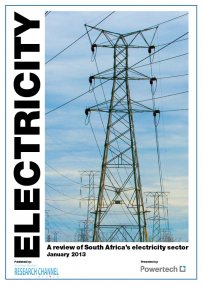
South Africa’s electricity generation capacity has, in recent years, been inadequate to meet the country’s demand and much criticism has been levelled at government regarding the electricity supply shortfalls that have affected the country. While the country has managed to avoid a total collapse of its electricity system, power supply constraints have been identified as having the potential to slow the country’s gross domestic product growth outlook. Analysts contend that economic growth of 6% will be impossible if electricity capacity does not increase at a significantly higher pace than the current one. Even with the new power stations that are under construction by State-owned power utility Eskom, the expansion in power capacity is inadequate for the country to achieve its desired growth rate.
Recognising that the current electricity shortfalls are as a result of failure to invest timeously in new generation capacity, participants in South Africa’s power sector have emphasised that investment decisions about further new capacity need to be taken soon, as it is believed that the negative impacts of an energy shortfall are much worse than the risk of potentially overinvesting in new energy generation capacity.
This report provides an overview of the state of electricity generation and transmission in South Africa and examines electricity planning, investment in generation capacity, electricity tariffs, the role of independent power producers and demand-focused initiatives, among other issues.
The report is a summary of information published in Engineering News and Mining Weekly, as well as information available in the public domain and does not purport to provide analysis of market trends.
Published on: January 29, 2013.
Table of contents
List of abbreviations 1
Key developments 2
State of electricity generation 3–4
Ensuring adequate coal supplies 5–6
Electricity planning 7–9
- Implementing the IRP 8
Eskom’s generation investment 10–13
- Return-to-service projects 10
- New baseload capacity 10
- Peaking and renewable projects 11
- Refurbishment projects 13
- Coal investments 13
Electricity tariffs 14–18
- Eskom’s financial performance 17
- Concerns regarding tariff increases 18
Independent power producers 19–22
- Renewable IPP projects 19
- Baseload IPP capacity 20
- Cogeneration and gas 20
- DoE IPP projects 20
- Self-generation projects 20
- Facilitating the introduction of IPPs 22
Demand-focused initiatives 23–25
- DMP and DRA programmes 23
- Power buy-backs 24
- Residential power reduction initiatives 24
- An energy conservation scheme 25
State of electricity transmission 26–28
- Transmission change 26
- The transmission development plan 27
State of electricity distribution 29–31
- New options for resolving distribution issues 29
- Electrification 31
Outlook 32–33
Appendices 34–37
- Appendix 1: Supplier news 34 A
- ppendix 2: Extract from the National Development Plan 2030 36
Main sources 38–39